
Political Prisoners Support. Memorial
Russia · Political Prisoners Support
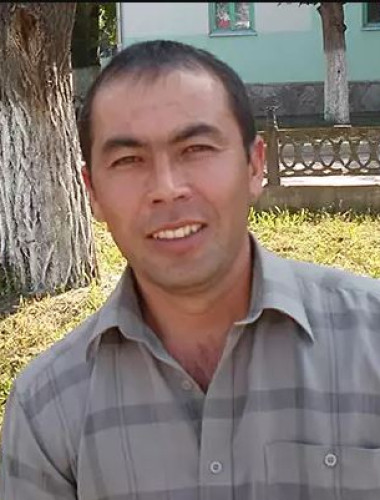 Russia
May contain extraction or translation errors.
Adds this case to your workspace and turns on email alerts for updates.
We'll email you when new information about Gibadullin Akhat Aksanovich is published.
You'll receive a confirmation email. Unsubscribe any time from a link in the emails.
How to read this section
This is a plain reading of published international standards against the facts recorded on this page. It is not a finding. No court, treaty body or UN special procedure has ruled on this case, and The Detained makes no assessment of guilt, innocence or state responsibility. Each entry below appears because a specific field on this record brings the standard into play, and says which field that was.
Nobody may be deprived of liberty except on grounds and by procedures established by law. Anyone detained is entitled to have a court decide the lawfulness of the detention without delay, and to compensation if the detention was unlawful.
On this record: This record documents a deprivation of liberty beginning with the arrest recorded below.
Treaty textA fair and public hearing by a competent, independent and impartial tribunal established by law, with adequate time and facilities to prepare a defence, counsel of the person’s own choosing, and the right to examine witnesses.
On this record: This record carries a criminal prosecution under articles 212 and 318.
Treaty textAnyone convicted of a crime has the right to have the conviction and sentence reviewed by a higher tribunal according to law. The review has to be genuine, not a formality.
On this record: A conviction is recorded on this file.
Treaty textThe right of peaceful assembly and the right to freedom of association are to be respected, subject only to restrictions that are prescribed by law and necessary in a democratic society. General Comment No. 37 (2020) sets out how the Committee applies this to protest.
On this record: The case is documented as arising from protest or organising activity.
Treaty textThe UN Working Group on Arbitrary Detention sorts submissions into five categories. On the facts recorded here, a submission would most naturally be filed under:
Which category applies, and whether the detention is arbitrary at all, is for the Working Group to decide.
Individual complaint asking the Working Group to find the detention arbitrary and to name a remedy.
Open for every state. Domestic remedies do not have to be exhausted first, and the person’s consent or that of their family is normally required.
How to submitAn urgent appeal or allegation letter to the Special Rapporteur on freedom of peaceful assembly and of association, the Special Rapporteur on the situation of human rights defenders and the Special Rapporteur on the situation of human rights in the Russian Federation.
Mandate holders can write to a government within days, which is why this is the fastest route on the list.
How to submitIndividual communication under the First Optional Protocol, alleging breaches of the Covenant articles listed above.
Domestic remedies must be exhausted, or shown to be unavailable or ineffective in practice.
How to submitApplication after domestic remedies are exhausted, within the four month time limit.
The events dated on this record fall after 16 September 2022, after which the Court is no longer competent for this state.
How to submitEvery model behind the scores on this page was built and trained in-house, on our own case documentation — nothing is delegated to a black box. We work glass-box: each score opens to show the exact factors that moved it (the "Why this score?" panels), and the full training and calibration methodology is public.
Models miss nuance. Scores, predictions, and summaries on this page are produced by statistical and language models from the documents we have collected. They can be incomplete or wrong, and they cannot capture the legal nuance of an individual case — sentencing above all, where outcomes turn on circumstances no model sees.
Not for court. Do not cite these figures directly in court or in legal proceedings. They are research aids, not evidence and not legal advice. Verify every detail against the original sources listed on this page before relying on it.
Not a verdict. Our findings describe patterns in the data we have documented. They are not a determination that any individual case is unjust — that judgment belongs to the people involved, their families, and competent courts and tribunals.
The Detained. (2026). Case file: Gibadullin Akhat Aksanovich (TD case cmgn9z69, record version 2026-08-16). Retrieved September 18, 2026, from https://thedetained.org/prisoners/cmgn9z69c003rlifthe0oc4b7. Original data from Political Prisoners Support. Memorial (https://memopzk.org/figurant/gibadullin-ahat-aksanovich/).
Formats reflect this case as an online database record. Always verify the original source before citing in legal filings.
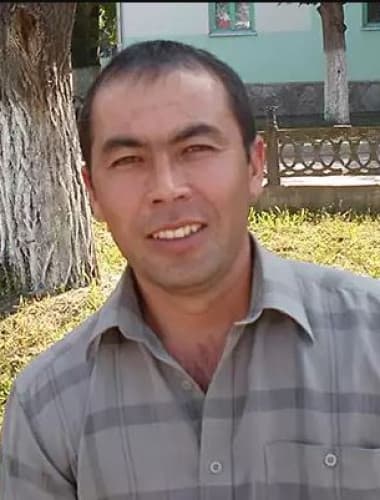
Гибадуллин Ахат Аксанович
Akhat Gibadullin was sentenced to 5 years in a general regime colony for participating in mass riots and using violence against a representative of authority. The circumstances surrounding his arrest and the specific details of the charges are not fully detailed in the provided text.
May contain extraction or translation errors.
Гибадуллин Ахат Аксанович родился 11 декабря 1981 года, житель деревни Ишмурзино Баймакского района, гражданин России, женат, отец двух несовершеннолетних детей, работал охранником. 5 мая 2025 года приговорён по ч. 2 ст. 212 УК РФ («Участие в массовых беспорядках, сопровождавшихся насилием, применением предметов, представляющих опасность для окружающих, а также оказанием вооружённого сопротивления представителю власти») и ч. 1 ст. 318 УК РФ («Применение насилия, не опасного для жизни или здоровья, либо угроза применения насилия в отношении представителя власти или его близких в связи с исполнением им своих должностных обязанностей») к 5 годам лишения свободы в исправительной колонии общего режима. Лишён свободы не позднее 23 января 2024 года.
How to read this section
This is a plain reading of published international standards against the facts recorded on this page. It is not a finding. No court, treaty body or UN special procedure has ruled on this case, and The Detained makes no assessment of guilt, innocence or state responsibility. Each entry below appears because a specific field on this record brings the standard into play, and says which field that was.
Nobody may be deprived of liberty except on grounds and by procedures established by law. Anyone detained is entitled to have a court decide the lawfulness of the detention without delay, and to compensation if the detention was unlawful.
On this record: This record documents a deprivation of liberty beginning with the arrest recorded below.
Treaty textA fair and public hearing by a competent, independent and impartial tribunal established by law, with adequate time and facilities to prepare a defence, counsel of the person’s own choosing, and the right to examine witnesses.
On this record: This record carries a criminal prosecution under articles 212 and 318.
Treaty textAnyone convicted of a crime has the right to have the conviction and sentence reviewed by a higher tribunal according to law. The review has to be genuine, not a formality.
On this record: A conviction is recorded on this file.
Treaty textThe right of peaceful assembly and the right to freedom of association are to be respected, subject only to restrictions that are prescribed by law and necessary in a democratic society. General Comment No. 37 (2020) sets out how the Committee applies this to protest.
On this record: The case is documented as arising from protest or organising activity.
Treaty textThe UN Working Group on Arbitrary Detention sorts submissions into five categories. On the facts recorded here, a submission would most naturally be filed under:
Which category applies, and whether the detention is arbitrary at all, is for the Working Group to decide.
Individual complaint asking the Working Group to find the detention arbitrary and to name a remedy.
Open for every state. Domestic remedies do not have to be exhausted first, and the person’s consent or that of their family is normally required.
How to submitAn urgent appeal or allegation letter to the Special Rapporteur on freedom of peaceful assembly and of association, the Special Rapporteur on the situation of human rights defenders and the Special Rapporteur on the situation of human rights in the Russian Federation.
Mandate holders can write to a government within days, which is why this is the fastest route on the list.
How to submitIndividual communication under the First Optional Protocol, alleging breaches of the Covenant articles listed above.
Domestic remedies must be exhausted, or shown to be unavailable or ineffective in practice.
How to submitApplication after domestic remedies are exhausted, within the four month time limit.
The events dated on this record fall after 16 September 2022, after which the Court is no longer competent for this state.
How to submitArrest Date
January 23, 2024
Sentence Length
5 years
The closest historical cases in our archive whose subjects walked free — the playbooks that worked for someone in a comparable situation.